Professional Summary: The Hidden Kingdom of Fungi
Overview
The transcript is a documentary-style narration exploring the biology, ecology, and emerging technological applications of fungi, with particular attention to mycelium networks. It weaves together field observations, laboratory experiments, and interviews with leading mycologists, ecotoxicologists, environmental engineers, and biologists to argue that fungi are not parasites or curiosities but ancient, sophisticated organisms whose properties may help solve some of the most pressing environmental and infrastructural challenges of our time. The piece is structured as a sustained case for taking fungal intelligence seriously, both as a subject of scientific inquiry and as a model for designing future technologies.
The Fungal Kingdom and Its Evolutionary Significance
The narration opens by situating fungi historically and taxonomically. Fungi colonized the emerging continents hundreds of millions of years ago, gradually establishing a vast and largely invisible realm inside trees, plants, and soils. They are neither animal nor plant but constitute one of the largest kingdoms in nature, ranging from organisms larger than a blue whale to specimens the size of a speck of dust. Crucially, fungi have survived ice ages, mass extinctions, and the arrival of humans by developing a form of intelligence that allows them to adapt to extreme conditions and colonize almost every ecological niche. This framing establishes the central thesis: fungi are not primitive but rather deeply sophisticated, and their longevity is itself evidence of the soundness of the strategies they employ.
A long-standing cultural disdain for fungi is acknowledged. Their ability to spoil food and decompose organic matter has historically associated them with disgust and fear. The discovery of penicillin from a melon mold in the late 1930s is presented as the turning point in public perception, after which fungi began to be considered for their constructive properties rather than dismissed as agents of decay.
Paul Stamets and the Healing of Habitats
A substantial portion of the transcript is built around the American mycologist Paul Stamets, who is portrayed as one of the most charismatic ambassadors of contemporary mycology. Stamets advances the view that habitats, like bodies, possess immune systems, and that mushrooms function as bridges between human health and ecosystem health. His position, echoed by thousands of mycologists worldwide, is that fungi have evolved to create sustainable habitats, and that without such habitats human existence is not viable. Mushrooms, in his framing, exert a mothering influence on the systems that provide food, medicine, and ecological stability.
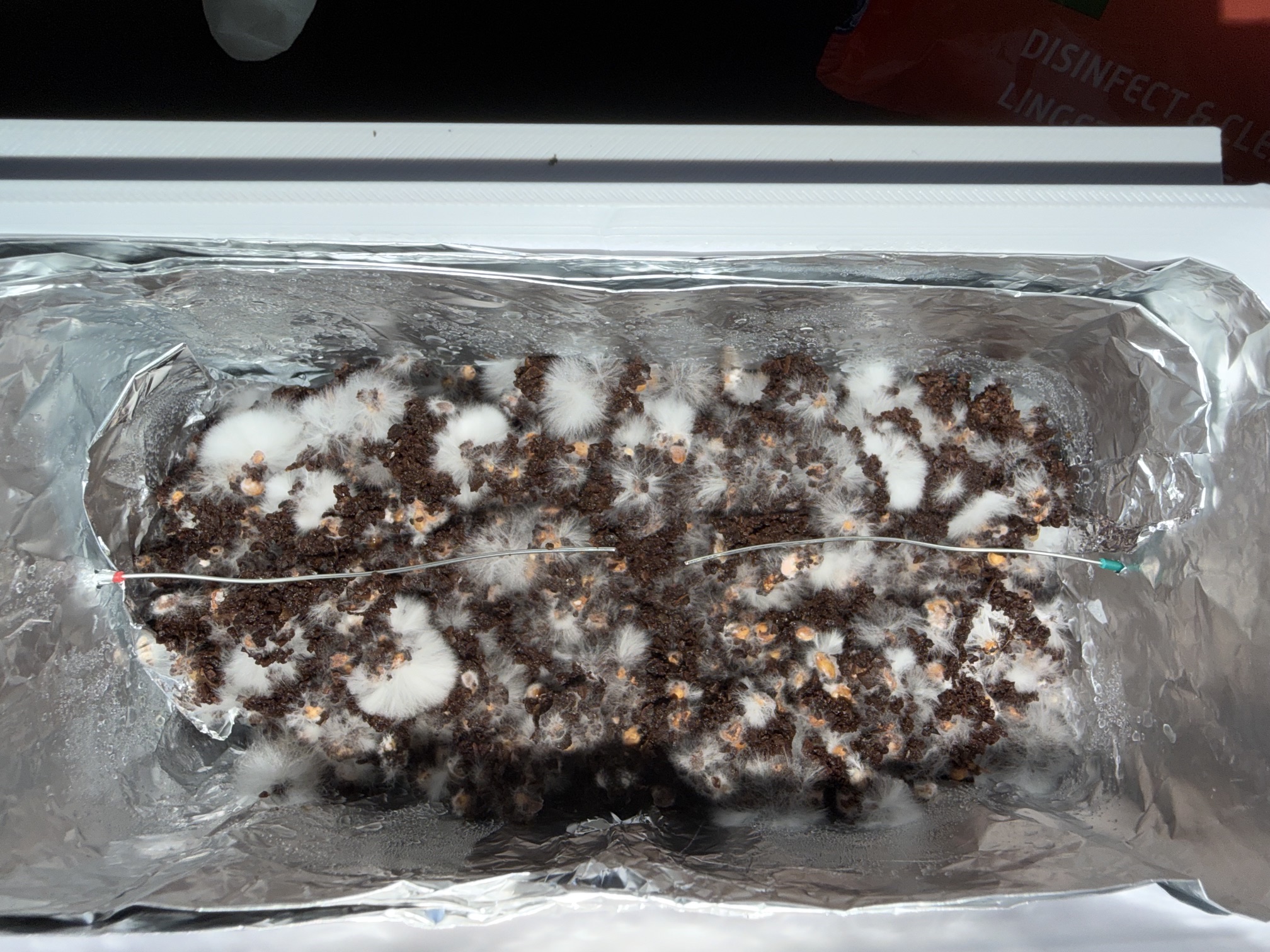
Stamets emphasizes that what is visible aboveground, the stem and cap of a mushroom, is only a small fraction of the organism. The bulk of fungal life is found in mycelium, dense underground networks that can extend across kilometres in any direction. Mycelium continually moves through habitats, decomposes debris, builds soil, and responds dynamically to disturbance. The narration describes mycelium leaping up in the wake of every human footstep to consume the woody debris that step has created, a vivid image meant to overturn the static, scenic conception of nature.
Mycoremediation: Fungi as Decontaminators
The transcript devotes significant attention to mycoremediation, a soil decontamination technique pioneered by Stamets and developed in partnership with the ecotoxicologist Mike Pinser and the environmental engineer Howard Sprouse. The premise is that decomposer fungi, which evolved to break down complex organic matter into smaller and more useful molecules, can be deployed against toxic waste, which the narration reframes as simply another fungal feedstock.
The methodology is described in detail. Mycelium is first grown on alder wood chips. These inoculated chips are then sandwiched above and below a layer of contaminated sediment, in this case soil polluted with polycyclic aromatic hydrocarbons. Over one to two weeks the mycelium grows together through the contaminated layer, consuming the PAHs in the process. Pinser explains that hundreds of derelict industrial sites in the Pacific Northwest have built up hydrocarbon concentrations that in some cases exceed those found in oil spills, and that the difficulty in moving from the laboratory to the field lies in identifying strains that can compete with native soil organisms and survive in variable real-world conditions.
The biological mechanism is also explained. Mycelium has a chitin cell wall, comparable to a crab's shell, which allows it to tolerate temperature extremes, variable salinity, and contact with toxins. The fungus secretes extracellular enzymes, visible as small white bubbles in microscopy, which migrate toward the oil and break it down progressively into smaller molecules. The narration emphasizes the elegance and simplicity of this process and notes that the mechanism is not fully understood even by the researchers who use it.
The outcome of a pilot project at a former truck maintenance depot is presented as proof of concept. After treatment the soil is rich in worms, smells of healthy earth, and is judged viable for almost any subsequent use. A single trailer of mycelium-inoculated wood chips is calculated to be capable of decontaminating five times its volume of polluted land. At the conclusion of one experimental site, oyster mushrooms fruited on previously polluted ground with no trace of contamination in their flesh. The decomposition initiated by the fungus is taken up by other soil microorganisms after the fungus dies, and the resulting soil is described as richer than before treatment.
Industrial Enzymes and Green Chemistry
The transcript then expands the lens from environmental remediation to industrial chemistry. Humans have made use of fungal enzymatic activity for thousands of years in the production of bread, miso, sake, beer, and aged cheeses. Today, fungal enzymes are central to a growing number of industrial processes. The Danish company Novozymes is highlighted as a major player, producing enzymes at industrial scale for use in paper manufacturing, sunglasses, cosmetics, textiles, and laundry detergents.
The mycologist Mikako Sasa, working in Novozymes' Copenhagen laboratories, explains the logic of enzyme matching. Different fungal genera specialize in different enzyme classes: Aspergillus produces amylases, Trichoderma produces cellulases, Humicola produces a different set, and Fusarium produces lipases. Each enzyme has specific industrial uses, with lipases for example used in detergents to break down fatty stains so that washing can occur at lower temperatures and thus consume less energy.
Novozymes maintains a strain library of tens of thousands of fungi, preserved in liquid nitrogen and sourced from environments as varied as Greenland, volcanic slopes, and the jungles of Borneo. The company searches continuously for species that can survive in the harsh conditions required by industrial processes, and protein designers then graft properties from one organism onto another to produce chimeric super-enzymes. One illustrative example is the grafting of a heat-resistant protein onto a lipase to produce an enzyme capable of working at industrial temperatures.
The broader implication, articulated by Sasa, is that society's deep dependence on petroleum could be partially replaced by fungal enzymes, including in the production of bioplastics. The framing here is that fungal chemistry offers a route toward less polluting industrial processes for the many objects that constitute modern daily life.
Mycorrhizal Symbiosis and Agriculture
A further section turns to mycorrhizal symbiosis, the partnership between fungi and plant roots that the narration argues is essential to the survival of the vast majority of plant species. Guillaume Becard, working at the CNRS in Toulouse, is shown examining plant roots under fluorescence microscopy, where the fungus appears as a green thread weaving between and into root cells and forming highly ramified structures called arbuscules. These structures provide an enlarged interface through which the plant trades sugars produced by photosynthesis for minerals and water that the fungus extracts from deep in the soil. Plants, immobile by nature, effectively outsource their prospecting and mining operations to fungal partners, and the network can even serve as a conduit for chemical communication and carbon exchange between separate plants.
Becard's research focuses on decoding the molecular signals, known as Myc factors, that initiate and regulate symbiosis. Plants release hormonal clouds that attract suitable fungi, and the fungi respond with Myc factors that signal the plant to suppress its immune response and produce the lateral roots that facilitate fungal entry. The research has applied significance: a better understanding of these signals could allow agriculture to reduce its dependence on phosphate fertilizers without losing yield, and could contribute to a renewed green revolution rooted in ecological balance rather than chemical input.
This research is then connected to the Great Green Wall project in the Sahel, an ambitious Pan-African program intended to reforest a seven thousand kilometre strip from Dakar to Djibouti to push back desertification. Scientists at the Bel Air Laboratory in Dakar, led by Amadou Bar, have screened dozens of fungal strains and selected Glomus aggregatum, a fungus that survives in desert sand, as the most efficient partner. Paired with the jujube tree, whose fruit is locally valued, the fungus inoculates seedlings before transplantation. The expectation is that inoculated seedlings will increase their root surface area, better absorb phosphorus and nitrogen, survive at higher rates, and ultimately fruit more abundantly than untreated controls. The Glomus network is expected to expand beyond the jujube roots to colonize neighbouring crops, redistributing nutrients across an emerging plant community and gradually building a sustainable underground trading system. The pilot in Furlough province in northern Senegal is positioned as a model that could spread to Burkina Faso, Mali, and other countries facing desertification.
Mycelium Networks as Models for Infrastructure
The final major thread of the transcript turns to mycelium networks as inspirations for the design of human infrastructure. Lynne Boddy, a Welsh biologist who studies the architecture of mycelium networks, leads field excavations of cord-forming species in forest soils. Her team maps the connections between organic resources such as acorns and twigs, traces how nutrients are translocated through the network, and observes how the system reroutes when parts are damaged. Some fungal networks reach extraordinary dimensions: an Armillaria bulbosa specimen discovered in Michigan was found, over the course of several thousand years, to have grown to roughly the weight of a whale and to cover around fifteen hectares.
Boddy explains that mycelium continually remodels itself in response to its environment, concentrating growth where resources are found and regressing from less productive regions. Networks are simultaneously exploratory, distributive, and resilient, and they achieve all of this without any central knowledge of their overall structure. The fungus is, as Boddy puts it, blind, building its architecture purely through local rules.
Mark Fricker, also at Oxford, has investigated the internal dynamics of these networks by injecting radioactive markers and observing the movement of nutrients. The results suggest that fungi often choose to use only part of their network at any given time, redirecting resources toward areas of active growth while allowing other regions to die back and be recycled. Because these organisms have survived for very long evolutionary periods, the assumption is that whatever rules they use to make such decisions represent reasonable compromises between cost, robustness, and adaptability.
The argument extends from biology to technology. The properties that make mycelium networks effective, namely robustness, adaptability, and self-organization, are precisely those required of modern infrastructure, especially internet and mobile telephone networks that must respond instantaneously to traffic spikes and localized failures. Fricker has demonstrated this principle in a now-famous experiment with the slime mould Physarum polycephalum, which, when placed on a map of the United Kingdom with oat flakes representing major cities, recreated in roughly forty-eight hours a network topology resembling the British rail system that took human engineers generations to develop. Notably, the slime mould often makes different choices than the engineers, balancing shortest-path efficiency with redundant cross-connections that preserve service if any single link fails. The unresolved question is how much redundancy is appropriate for the kinds of shocks human systems actually face. Biological organisms, having endured many such shocks, may have identified rules worth borrowing.
To pursue this line of inquiry, British researchers have formed the Fungal Network, an interdisciplinary collaboration of mathematicians, physicists, computer scientists, and biologists working to identify constants and principles that govern intelligent fungal systems.
Frontiers and Outlook
The transcript concludes by sketching the breadth of contemporary fungal research. Japanese scientists have isolated a fungal molecule effective against certain autoimmune diseases. Biochemists at Yale are studying an Amazonian fungus capable of degrading polyurethane, a material that is otherwise non-recyclable. Swiss researchers are developing fungal proteins for less polluting dye production. Globally, there is a sustained search for fungal enzymes that can support second-generation biofuel production.
The closing emphasis is on scale and unknown territory. Fewer than fifteen percent of fungal species have been identified, and the remainder are likely to include organisms with properties that have no current parallel. The closing image likens the unexplored fungal kingdom to distant galaxies, framing mycology as a frontier discipline with significant unrealized potential.
Conclusion
Taken as a whole, the transcript builds a coherent argument across multiple registers. Scientifically, it presents fungi as ancient, evolved problem-solvers whose biological machinery has already addressed challenges, such as decomposition, resource distribution, network resilience, and chemical synthesis, that human societies are still struggling with. Technologically, it positions fungal systems as both direct tools, in mycoremediation, industrial enzyme production, and agricultural symbiosis, and as design templates, in network architecture and self-organizing infrastructure. Philosophically, it invites a reconsideration of intelligence itself, locating sophisticated decision-making not in centralized cognition but in distributed, blind, locally-governed systems that have endured for millions of years. The recurring suggestion is that the solutions to many contemporary problems are not awaiting some future invention but are quite literally beneath our feet, waiting to be properly understood and partnered with.